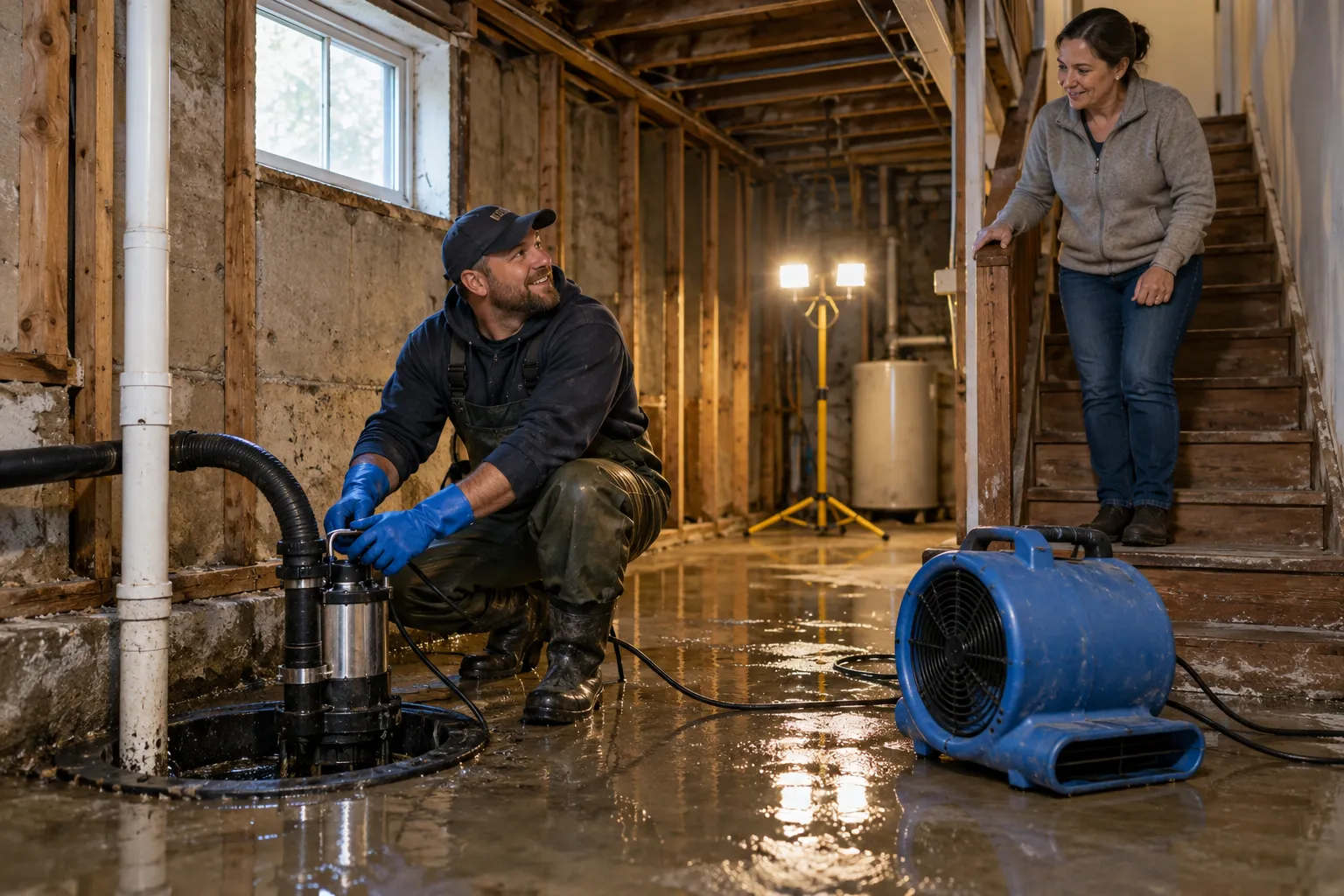
A flooded basement is stressful, but the path forward is simple. First, make the space safe. Next, get the water out. Then dry the walls, floor and framing so the damage does not spread upstairs.
Communitieshad Restoration is a referral service. It connects homeowners in the Greater Madison area with independent local providers who handle pumping, flooded basement cleanup and drying. Spring flooding, heavy storms and failed sump pumps are common causes here. A provider can look at the damage, explain the steps and give you a written estimate. Doing the job right protects the home and its value.
Flooded Basement? Safety Comes First
Before you think about cleanup, think about safety. Water and electricity are a dangerous mix. Use this order.
Step 1: Stay Away From Electricity
- Do not walk into standing water if outlets, cords or the electrical panel may be wet.
- If you can reach the main breaker without stepping in water, shut it off.
- If you cannot reach it safely, ask your utility or an electrician for help.
- Never run a wet vacuum or a plug-in pump from a wet area.
Step 2: Think About What the Water Is
Rainwater and groundwater are bad enough. Water that came up through a floor drain may include sewage. Treat that as unsafe. Keep children and pets out. Wear boots and gloves if you must go in, and do not touch the water with bare skin.
Step 3: Take Photos and Notes
First, take photos and video of the water line, damaged items and the source if you can see it. Next, write down the date and time you found the water. Then keep your receipts. Providers can often help document damage for a claim. Some policies may cover sudden damage, so check your policy.
Find Out Where the Water Came From
The source decides the repair. Look for these common causes:
- A sump pump that stopped, lost power or could not keep up
- Heavy rain or spring melt pushing water through walls or the floor
- A burst or leaking pipe, water heater or washing machine hose
- A backed-up floor drain or sewer line
- Cracks in the foundation or a window well that filled up
If the cause is still active, the basement can flood again. Tell the provider what you saw. They can check behind walls and around the sump pit.
Why Basement Floods Need Fast Action
A basement holds moisture longer than other rooms. It has little airflow, and concrete and soil keep releasing damp. In hot, humid summers the problem gets worse.
Here is what can happen as time passes:
- Water soaks into drywall, insulation and wood framing.
- Mold can start to grow within a couple of days on damp materials.
- Odors settle into carpet and stored items.
- Wood trim and flooring can swell, warp or rot.
That is why emergency water damage repair starts with getting the water out. Many providers can respond quickly, but availability varies.
What Flooded Basement Cleanup Includes
A typical job follows a clear order. Your provider may adjust it for your home.
Water Extraction
First comes water extraction. Pumps and strong vacuums remove standing water. If the basement is deep, providers often lower the level in stages so the walls and floor are not stressed. Wet carpet and pad are usually pulled out next.
Removing What Cannot Be Saved
Soaked drywall, insulation and padding often have to go. Cutting out wet material feels drastic. It stops moisture from hiding in the wall. This is the "check behind walls" step, and it matters.
Structural Drying
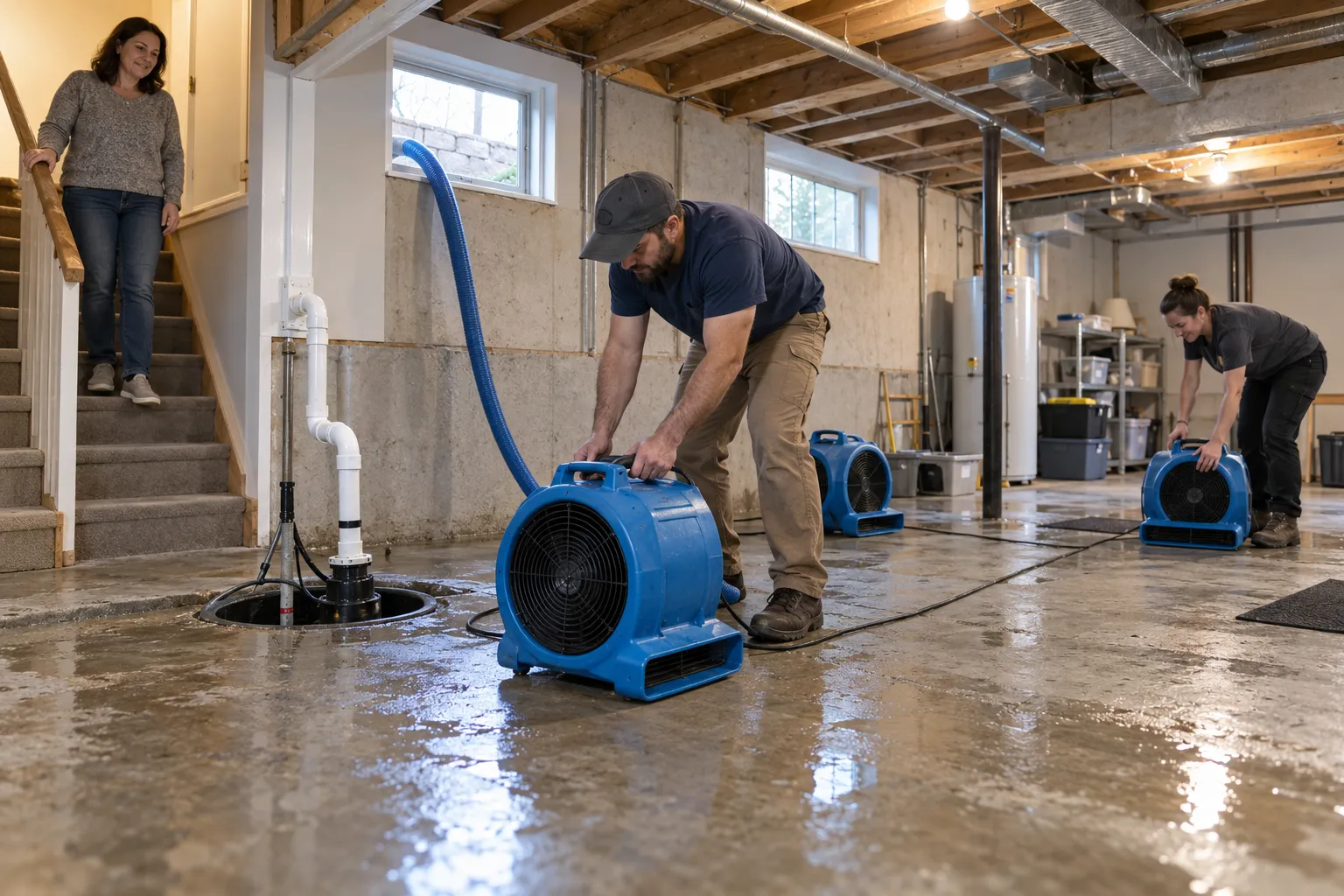
Then comes structural drying. Fans and dehumidifiers pull moisture from the floor, studs and wall cavities. Providers often use moisture meters to check progress. A wall that feels dry can still be wet inside. Dry it right, and mold is much less likely to follow.
Cleaning and Sanitizing
When the area is dry, surfaces are cleaned and treated. Floods from sewage or dirty groundwater need extra care. Ask the provider how they handle that.
Finished vs. Unfinished Basements
An unfinished basement with a concrete floor is usually simpler. Water comes out, the floor is cleaned and dried, and the job is often shorter.
A finished basement has more at stake. Carpet, drywall, trim, cabinets and insulation can all hold water. Walls may need openings cut so air can reach the cavity. Flooring may need to come up. Expect more steps, more drying time and more rebuilding afterward.
Older Homes Need Extra Care
Many houses here are frame homes that are many decades old. Bungalows and ranch homes often have full basements with old walls and past repairs. Older homes can hide surprises:
- Old plaster, wiring or pipes that react badly to moisture
- Past patch jobs that trap water
- Stone or block foundations that seep in several spots
- Materials that may need testing before removal
Tell the provider the age of your house and any repairs you know about. They can plan around it.
Protect the Home's Value
A basement that was dried poorly can show up later as a smell, stained walls or mold. Buyers and inspectors notice these things. Careful cleanup, clear records and proper drying help protect the home and its resale appeal. Ask for written notes on what was removed and what was dried.
Your Belongings
Sort items into three groups:
- Keep and dry: Hard items like metal tools, glass and some plastics
- Maybe: Furniture, books, photos and papers. Move them to a dry place and ask the provider.
- Toss: Soaked carpet, mattresses, cardboard and anything touched by sewage
Photograph items before you throw them out. That helps with any claim.
After the Cleanup
Cleanup is not the last step. Next, rebuild and prevent a repeat.
1. Confirm the drying readings with the provider. 2. Test your sump pump and consider a battery backup. 3. Check gutters, downspouts and grading so rain moves away from the walls. 4. Seal cracks and fix any plumbing leaks. 5. Rebuild only after everything is dry.
Questions to Ask the Provider
Bring this list when you talk to a provider:
- What is the source of the water, and has it been stopped?
- Is the water clean, or does it need extra safety steps?
- How will you check that walls and floors are fully dry?
- What is included in the written estimate?
- Can you help document the damage for a claim?
- Will you clear any permits or testing needed for an older home?
Request a callback to check provider availability in your area.
What's Included
Water Extraction and Pumping
Pumps and vacuums remove standing water, often in stages to protect walls and floors.
Wet Material Removal
Soaked carpet, pad, drywall and insulation are taken out so moisture cannot hide inside.
Structural Drying
Fans and dehumidifiers dry floors, studs and wall cavities, with meters checking the progress.
Cleaning Up
Surfaces are cleaned and treated so the space is ready for rebuilding.
What Basement Cleanup Typically Costs
Prices vary with water depth, water type, basement size and finishes. These are typical U.S. ranges only. Always get a written quote before work starts.
| Item | Typical range | Notes |
|---|---|---|
| Water extraction | $500 – $2,500 | Depends on depth and area |
| Structural drying | $1,000 – $4,000 | Equipment days and moisture checks |
| Carpet and pad removal | $300 – $1,500 | Larger rooms cost more |
| Drywall and insulation removal | $500 – $3,000 | Based on how high the water rose |
| Sewage or contaminated water cleanup | $3,000 – $10,000 | Extra safety and disposal steps |
| Mold testing or treatment | $500 – $6,000 | Only needed if growth is found |
How It Works
Make It Safe
Shut off power if you can do so safely, and stay out of water near electrical items.
Document and Request an Estimate
Take photos, then call or send the form so a provider can review it.
Pump, Remove and Dry
The provider removes water and wet materials, then dries the structure.
Check and Rebuild
Confirm drying readings, fix the cause, and rebuild once everything is dry.
Why Call Communitieshad Restoration
Protects Your Home's Value
Thorough drying and clean records help prevent hidden damage that can hurt a future sale.
Stops Mold
Removing water and drying walls quickly makes mold growth far less likely to start.
Saves Materials
Acting early can mean more flooring, framing and belongings are saved instead of replaced.
Care for Older Homes
Providers can plan around aging materials, past repairs and surprises behind the walls.
Other Services
Need flooded basement cleanup in Madison?
Request a callback to check provider availability, or send an estimate request. Tell us what happened and a local provider in our network can follow up.
No obligationFlooded Basement Cleanup FAQ
What should I do first when my basement floods?
Stay out of the water if electricity could be involved, and shut off power only if you can reach the breaker safely. Take photos, note the time, and contact a provider. Request a callback to check provider availability. Do not start moving heavy items in deep water.
How long does it take to dry a flooded basement?
Many jobs take several days, but it varies. Water depth, finishes and weather all matter. The provider should check moisture levels in walls and floors before saying the basement is dry.
Does homeowners insurance pay for basement flooding?
It depends on the cause and your policy. Some policies may cover sudden damage, while others exclude groundwater or sewer backup. Check your policy and ask the provider to help document the damage.
Reach a local provider
Request a callback to check provider availability, or send an estimate request. Tell us what happened and a local provider in our network can follow up.
No obligation