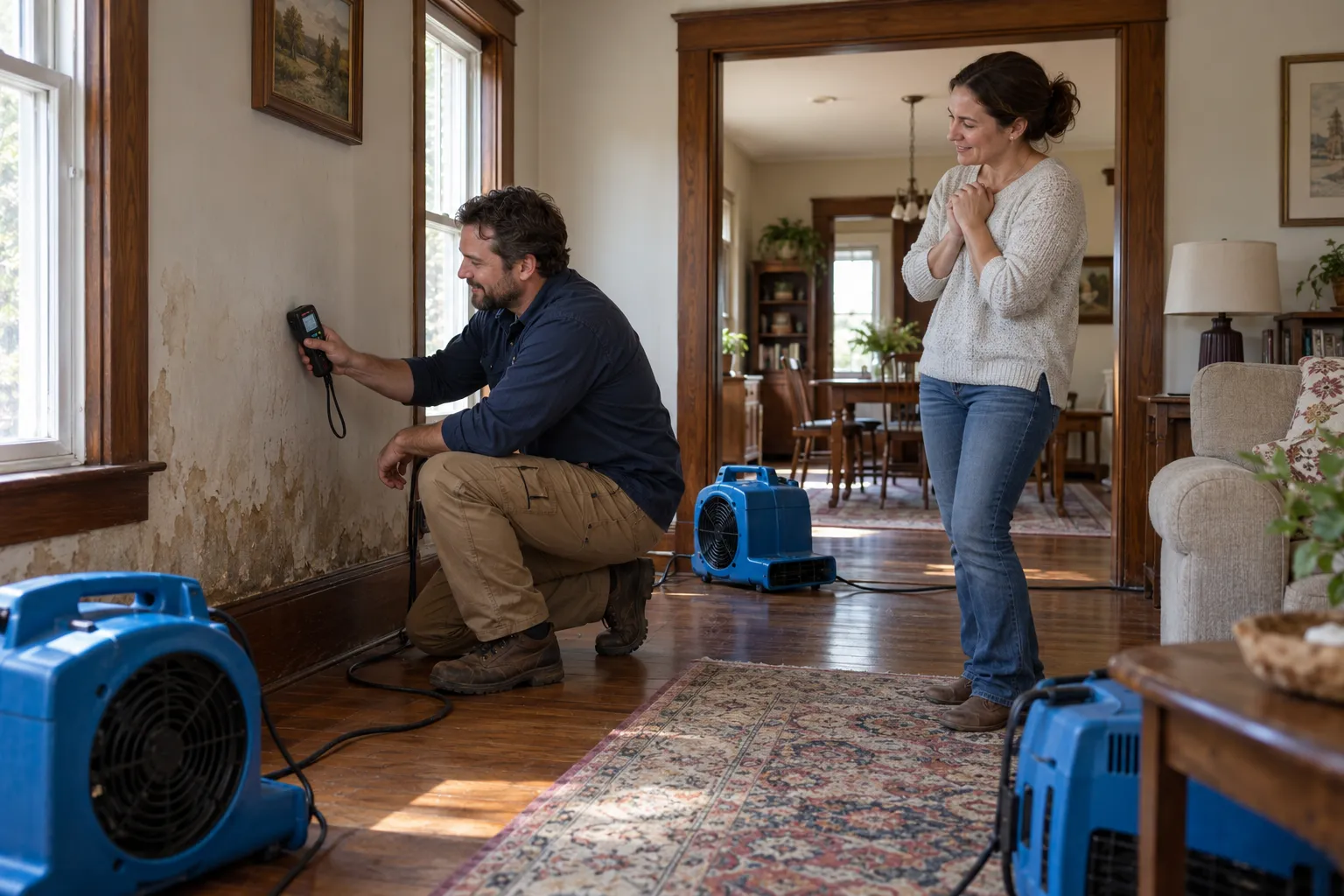
Water damage restoration is the full process of removing water, drying the structure, cleaning affected areas, and repairing what was harmed. It starts with water extraction and moves into structural drying, so moisture does not stay trapped in floors, walls, and framing.
Communitieshad Restoration is a referral service. We do not do the work. We connect homeowners in the Greater Madison area with independent local providers who handle emergency water damage repair. Doing the job right protects the home, its condition, and its resale value. That matters most in older houses, where aging materials and past repairs can hide surprises. A careful provider checks for hidden moisture before closing up walls and floors. Dry it right the first time.
Water Damage? Do These Things First
Work through this list in order. Each step protects you and the house.
1. Stay safe. Keep people and pets out of wet rooms. 2. Stop the source. Shut off the main water valve if a pipe or appliance is leaking. 3. Cut power to wet areas. Only do this if you can reach the panel without standing in water. 4. Take photos and video. Do this before you move anything. 5. Call for help. A local provider can start a plan.
Request a callback to check provider availability in the Greater Madison area.
Safety Checks Before You Touch Anything
Water and electricity do not mix. If outlets, cords, or appliances are wet, stay out and leave them alone.
Watch for these warning signs:
- Ceilings that sag or bulge
- Floors that feel soft or uneven
- A musty smell
- Sparks, buzzing, or tripped breakers
If you see a sagging ceiling, leave that room. Trapped water can be heavy and may drop without warning.
Why Timing Matters
Wet materials start to change fast. Drywall soaks up water. Wood swells. Carpet pads hold moisture like a sponge. Mold can begin to grow in a day or two when a space stays damp, and warm, humid summers make that more likely.
Cold winters add a different risk. A burst pipe can pour water into a wall for a long time before you notice. Spring flooding and heavy storms can push water into low areas of the house.
Many providers can respond quickly, but availability varies. Reach out early, then keep the list moving.
What Water Damage Restoration Covers
The work usually follows a set order. Here is the typical flow:
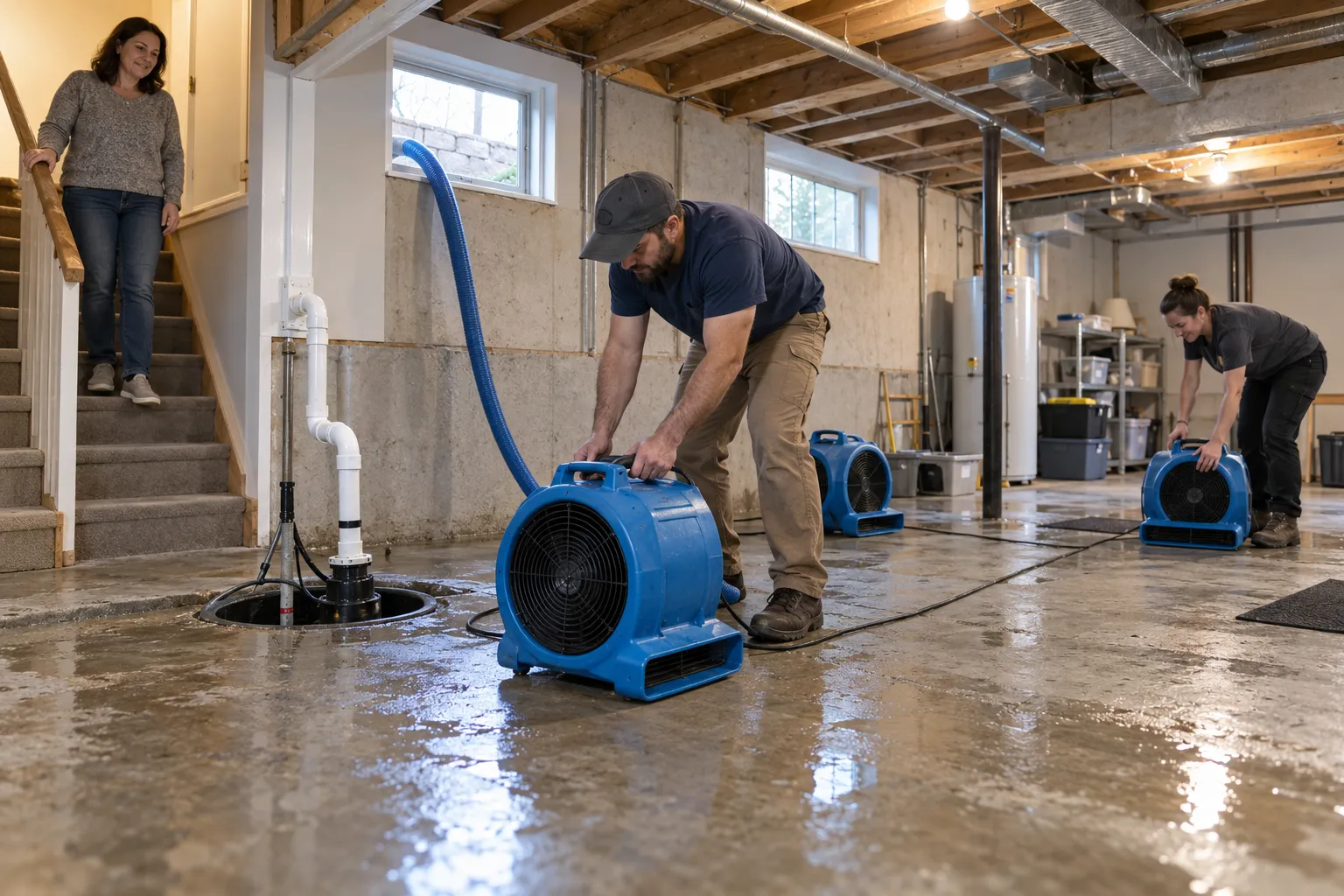
1. Inspection. The provider finds where water went, including hidden spots. 2. Water extraction. Pumps and vacuums pull standing water out. 3. Structural drying. Air movers and dehumidifiers dry floors, walls, and framing. 4. Cleaning and sanitizing. Affected surfaces are cleaned, and some items may be treated. 5. Repairs. Drywall, flooring, trim, and paint are replaced or fixed as needed.
Each step depends on the one before it. Skipping the drying step is how problems return later.
Water Extraction and Structural Drying
Extraction removes the water you can see. Structural drying handles the water you cannot see. Both matter.
Providers often use moisture meters to read wood, drywall, and concrete. These readings show whether a surface is truly dry. A floor can feel dry on top while the subfloor stays wet.
Ask the provider how they will track progress. A good plan includes repeat readings until the materials reach normal levels.
Know Your Water Type
Not all water is the same. The source changes how the cleanup is done.
- Clean water: a broken supply line or a leaking sink. It is the least risky, but it can turn worse if it sits.
- Gray water: a washing machine or dishwasher overflow. It may carry soap and germs.
- Black water: sewage backup or rising flood water. It is unsafe and needs trained handling.
If you think the water is gray or black, do not clean it yourself. Wait for a provider.
Check Behind Walls
Water travels. It runs down studs, under baseboards, and into insulation. The surface may look fine while the damage grows out of sight.
Older homes need extra care here. Plaster and lath, old subfloors, and past patch jobs can hold water in odd ways. Earlier repairs may cover problems no one knew about. A careful provider will open small test spots and look before deciding what to keep.
Documenting Damage for Insurance
Some policies may cover sudden damage, but coverage differs a lot. Check your policy and talk with your insurer.
Help your claim with this list:
- Photos and video of every wet area
- A list of damaged items, with age and value if you know them
- Receipts for emergency steps
- Notes on dates and times
Providers can often help document damage for a claim. Keep wet items until the insurer says you can discard them, unless they are unsafe.
Choosing a Restoration Provider
A provider in our network is independent. Still, ask the same questions of any company:
1. Are they licensed and insured where the law requires it? 2. Will they put the scope and price in writing? 3. How do they measure that the structure is dry? 4. Will they explain what they will remove and why? 5. Do they have experience with homes of your age and style?
Be careful with any quote that is vague. A clear written estimate prevents surprises.
Protect the Home and Its Value
A rushed job can leave hidden moisture. That can lead to mold, warped floors, and stained walls. These problems can cause trouble when you try to sell.
A complete job keeps records. Dry logs, photos, and invoices show future buyers and inspectors that the work was done properly. Save all of it in one folder.
Getting Your Home Back to Normal
After drying, the repair phase begins. Expect these tasks, in this order:
- Remove materials that cannot be saved
- Confirm dryness with final readings
- Replace insulation, drywall, and flooring
- Prime, paint, and finish trim
In bungalows and ranch homes with basements, ask about sump pump checks too. A working pump helps prevent a repeat.
Ready for the Next Step?
You do not need to sort this out alone. Give the details, and a local provider can walk you through the plan.
What's Included
Water Extraction
Pumps and vacuums remove standing water from floors, carpet, and low areas so drying can begin.
Structural Drying
Air movers and dehumidifiers pull moisture from walls, subfloors, and framing until readings look normal.
Cleaning and Sanitizing
Affected surfaces and salvageable belongings are cleaned, and some areas may be treated based on water type.
Repairs and Rebuild
Drywall, insulation, flooring, and paint are replaced or repaired so rooms return to their former condition.
Typical Water Damage Restoration Costs
Costs vary by job size, water type, materials, and how long water sat. These are typical U.S. ranges only. Always get a written quote that lists the scope before work begins.
| Item | Typical range | Notes |
|---|---|---|
| Inspection and moisture mapping | $150 – $500 | Sometimes folded into the full job |
| Water extraction | $500 – $2,500 | Depends on depth and area |
| Structural drying equipment | $800 – $3,500 | Based on days and equipment count |
| Cleaning and sanitizing | $300 – $2,000 | Higher for gray or black water |
| Drywall and insulation replacement | $1,000 – $5,000 | Varies by wall area removed |
| Flooring repair or replacement | $1,500 – $8,000 | Wood and tile cost more than carpet |
How It Works
Contact a provider
Request a callback to check provider availability, or request an estimate through the form.
Inspection and plan
The provider checks the damage, finds the source, and explains the scope.
Extraction and drying work
Water is removed, then equipment dries the structure while readings are tracked.
Repairs and final check
Damaged materials are rebuilt, and the provider confirms the home is dry.
Why Call Communitieshad Restoration
Protect Value
Proper drying and documented repairs help your house keep its condition and appeal when it is time to sell.
Stop Mold
Thorough drying removes the damp conditions where mold likes to grow.
Older Homes
Providers know aging plaster, old subfloors, and past repairs can hide problems.
Clear Plans
You get a written scope and price, so you know what comes next.
Other Services
Need water damage restoration in Madison?
Request a callback to check provider availability, or send an estimate request. Tell us what happened and a local provider in our network can follow up.
No obligationWater Damage Restoration FAQ
What should I do first when I find water damage in my house?
First, stay safe and stop the water source if you can. Next, turn off power to wet areas only if it is safe, take photos, and contact a local provider for help.
How long does water damage restoration take?
Drying often takes several days, and repairs can add more time. The total depends on how much water entered, the materials involved, and the water type. Ask your provider for a written timeline.
Does homeowners insurance cover water damage?
Some policies may cover sudden damage, such as a burst pipe, but not slow leaks or flooding. Check your policy and talk with your insurer. Providers can often help document damage.
Reach a local provider
Request a callback to check provider availability, or send an estimate request. Tell us what happened and a local provider in our network can follow up.
No obligation